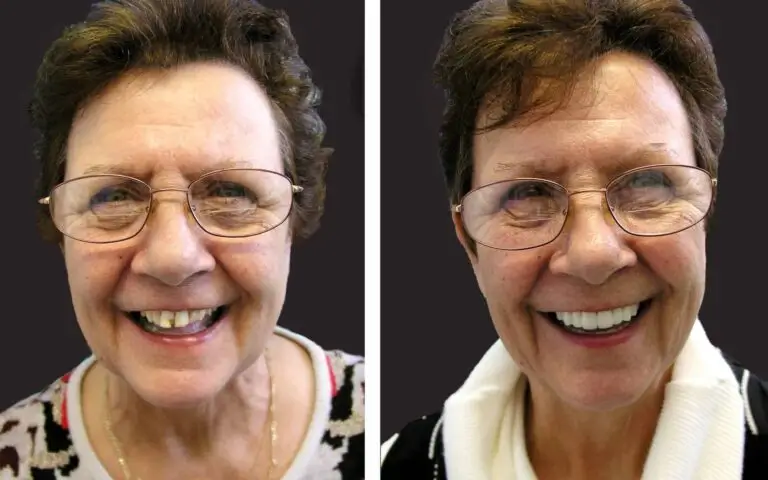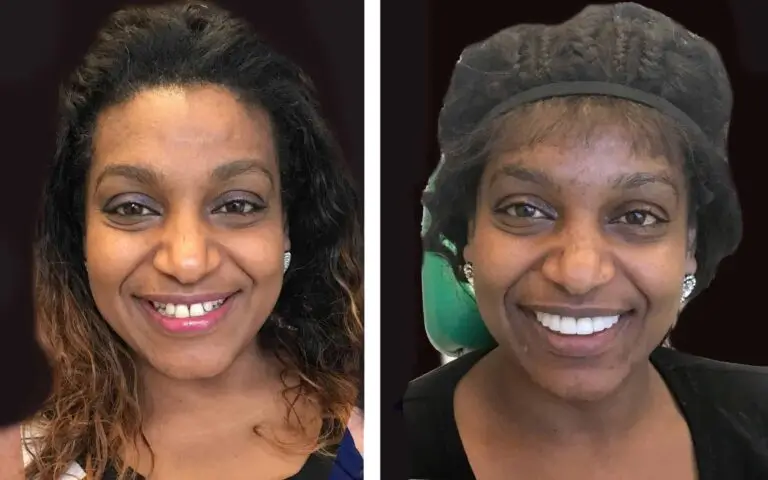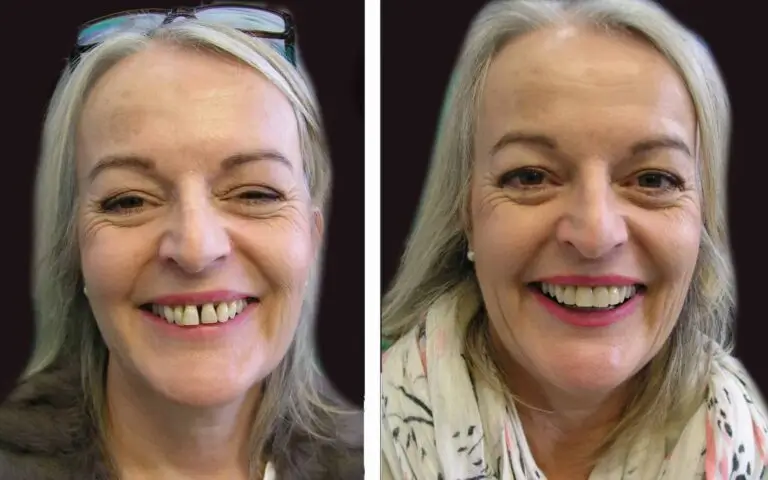


|
In order to answer that question, let's take a closer look
at the procedures... Peroxide based teeth whitening is
determined by the concentration of peroxide in the whitener
and the amount of time the whitener is in contact with the
surface of the teeth. So for the teeth to whiten, they need
to be exposed to an appropriate teeth whitener for an
appropriate amount of time. Hence, in order to get the same
degree of lightening, a teeth whitening system may either
employ a low concentration whitener for a long period of
time (at home teeth whitening products use this method) or a
higher concentration whitener for a short period of time
(professional teeth whitening treatments performed by
dentists use this method). If you are using at-home teeth
whitening kit, you have the bleaching materials at home and
perform the treatments on your own, unsupervised. An hour of
in-office treatment can produce the same results as one or
two weeks of at-home tray-based whitening. In
a professional teeth whitening treatment, the whitening
effect is seen immediately and is accomplished in just a few
appointments (usually one) and usually the treatment costs
more than the at-home teeth whitening products. Whitening
professional products contain 15-50% hydrogen peroxide. At
home products contain 3-10% hydrogen peroxide. This is why
professional teeth whitening treatments can bleach teeth
much more quickly and effectively.
The teeth whitening system that is best
for you can depend on factors such as: the amount of time
you have available, your temperament, and how much money you
have to spend.
Here are some characteristics of
professional and at-home teeth whitening systems...
Some advantages and disadvantages of
at-home teeth whitening:
-
The dental patient must be capable
of performing and complying with the whitening system's
technique and instructions.
-
The person must have the time and
inclination to perform the whitening treatments.
-
It can take some weeks or even
months before the final results are seen with at-home
systems.
-
At-home teeth whitening products
usually cost less than professional teeth bleaching
treatments.
Some advantages and disadvantages of
professional teeth whitening:
-
The whitening effect is seen
immediately.
-
The whitening is accomplished in
just a few appointments (possibly even just one).
-
Professional teeth whitening usually
costs more than at-home teeth whitening products.
How about over the counter Tooth
Whitening and Dental Bleaching system or products?
Most of the whitening products (such as
the strips) on the market will either take much longer (3
weeks) to obtain less/similar results and some products such
as the whitening toothpastes or gels are just not effective.
A lot of the whitening toothpastes are very abrasive and are
meant to just get rid of surface stains and not to actually
bleach the teeth. In addition due to their abrasiveness they
may cause tooth sensitivity in the long run.
Professional, In-Office Teeth
Whitening
in Melbourne City Area
These days, there are many ways to
achieve a whiter, healthier looking smile. Professional
teeth whitening costs can be minimal when compared to more
complex treatment with porcelain restorations. Even people
with sensitive teeth can take advantage of laser tooth
whitening for a smile that dazzles. Many patients prefer
tooth whitening to the take-home professional teeth
whitening trays on the market. And, while costs for teeth
whitening technology are usually more expensive, the
instantaneous advantage of one-hour whitening is hard to
resist.
-back to top-
The Teeth
Whitening Procedure
The
professional teeth whitening process begins with a minor
cleaning and removal of any plaque along the gum line. Once
this has been accomplished, its followed with a short
preparation to isolate your lips and gums and peroxide based
gel is applied to the teeth. This gel contains a
professional strength formula that ensures the laser
accomplishes the maximum possible amount of teeth whitening.
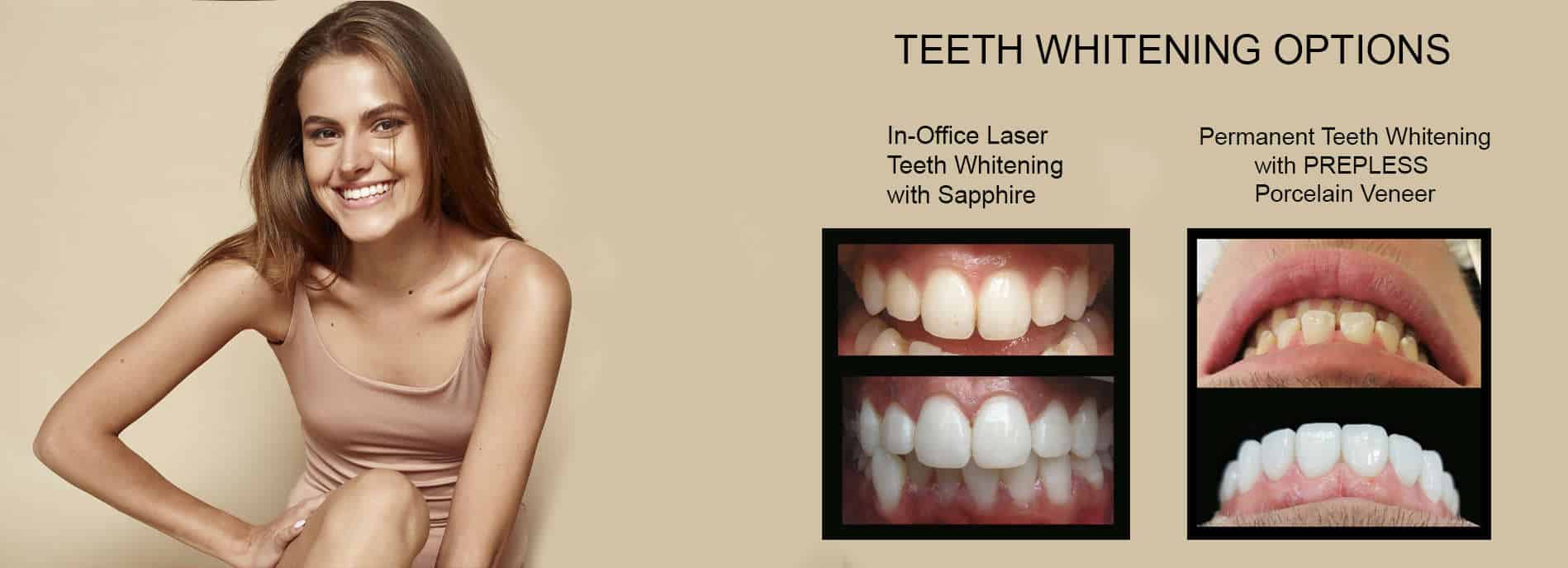
Next, a special light is used to activate the gel. The
process usually takes more than an hour for a full session
of ZOOM or equivalent of 3 x 20 minutes per session or
application, and whitens teeth by as many as 10 shades.
In extreme cases, the laser teeth whitening procedure may
need to be repeated to address deep stains caused by
medications such as tetracycline.
Teeth typically become at least six to ten shades whiter,
sometimes more. You'll be amazed with the results. In most
cases, teeth get even whiter the first few days after
procedure.
Sensitive
Teeth and Laser Tooth Whitening
One of the
major side effects of tooth whitening is that it can
increase the sensitivity of your teeth so it is advisable to
avoid very hot and also very cold drinks or food shortly
after your treatment. Even if you are one of the many people
who have sensitive teeth, professional teeth whitening is
still an option for a brighter smile. The tooth whitening
process is usually accomplished in a single visit, reducing
the need for repeated uses of the bleaching gel. This
provides a great solution for people with sensitive teeth,
and those who want instantaneous results.
Candidates
For In-Office Teeth Whitening
Most people are
potential candidates for the whitening procedure. However,
there are a few exceptions:
It is not advisable
to undertake whitening procedures under these circumstances
-
Age and
pregnancy issues. Here whitening is not available for
those under 16 years of age as the nerve of the teeth is
large at this stage of life. It could render the nerve
more sensitive or cause irritation. Pregnant or
lactating women are also not advised to use this method.
-
Sensitive
teeth and allergies. Those having sensitive teeth or
gums, with receding or defective repairs need to see
their dentist before engaging a whitening process.
Allergies to peroxide will definitely not be favoured
with a bleaching product
-
Gum
disease, damaged teeth, cavities, and exposed roots.
People with damaged teeth or worn enamel are not advised
to use any bleaching method. A bleaching agent might
enter any cavity and cause an inside damage. Hence it is
necessary to treat such defects before launching into a
whitening session. Bleaching does not work on roots also
since they do not have the enamel layer on which
bleaching acts.
-
Fillings,
crowns and restored portions. Dental restorations
sometimes make use of colored fillings or resin based
products (crowns, veneers, bridges) and these do not
whiten with bleaching. So an unequal whitening pattern
may appear if bleaching is applied under these
conditions. It is better to proceed with whitening
before attempting any restoration exercise on the teeth.
Best on your individual needs, we will advise on the
method of treatment applicable in such cases, and
confirming whether any importance is to be given to the
bleaching or restoration exercise first.
-
Those
expecting dramatic happenings may be disappointed with
results below their expectations. People using harmful
products like tobacco and wine need to be aware that the
result may not stay for longer periods if they do not
avoid such products. A more balanced expectation taking
into consideration one's own lifestyle and hygiene
pattern would give a more objective approach to the
results' appreciation. A good standard indication is
comparison of color of your teeth should be a little
whiter than that of your eyes.
-
Heavily
stained teeth. A light yellowish tint will definitely
disappear under bleaching; less effective results would
appear on brown tinted ones where as grayish or purple
stained ones may not reveal any effect. Certain
blue-gray stains which, are normally caused by
tetracycline take even more time to whiten and require
around 6 month of intensive care at the dentist's.
Darker stains may be appropriately treated by other
methods, for example: veneers, crowns, bonding.
-back to top-
Risk on
Teeth Whitening:
1. Peroxide
solutions have been used for many years as antiseptics in
the mouth. They are also widely used for their
teeth-whitening effects.
2. If tooth
sensitivity develops, fluoride home care gel may be
recommended for reducing sensitivity. If sensitivity
persists-for more than 12 hours or is severe, please contact
our office.
3. The
whitening procedure can cause temporary inflammation and
white spots on your gums or lips. This should resolve itself
within 12 hours. If it persists. Please contact our office.
4. If you have
teeth sensitivity, fillings that are breaking down, decay in
your teeth, erosions of the teeth, or exposed root surfaces
due to periodontal disease, the peroxide may have direct
access to the affected areas. These conditions need
correction prior to the whitening procedure. Please inform
your dentist of such conditions prior to treatment.
5. The
whitening procedure can be very effective at whitening the
teeth, but will not change the colour of fillings or crown(s)
already in or on your teeth. For aesthetic reasons, such
fillings may need changing after the whitening procedure.
6. The
whitening treatment plan has been reported not to be
effective on some patients. Our office will provide our best
efforts to whiten your teeth but lightening results cannot
be guaranteed.
7. The
In-office Teeth Whitening procedure can sometime caused
discomfort during the treatment. If you believe your
tolerance or threshold level to pain is low, we strongly
suggest taking Analgesics One hour before your Teeth
Whitening appointment to our office
Are there
any side effects of Teeth Whitening?
Sensitivity and
some discomfort during and after the treatment may occur
with some patients. On rare occasions, minor tingling
sensations are experienced immediately after the procedure,
but always dissipate, these symptoms are only temporary and
disappear within a few days. Using a sensitive toothpaste
for 2 weeks prior to treatment can help prevent any
sensitivity.
Analgesics before and after the procedure will manage the
discomfort. It's strongly advised also to have the procedure
few days to few weeks before any special occasions like
Weddings, anniversaries or any special events or functions.
Is Teeth
whitening safe?
Yes. Extensive
research and clinical studies indicate that whitening teeth
under the supervision of a dentist is safe. We consider
tooth whitening to be the safest cosmetic dental procedure.
As with any tooth whitening product, it is not recommended
for children under 13 years of age and pregnant or lactating
women.
-back to top-
Post-whitening care instructions
I. For 48 hours
after the treatment the teeth are susceptible to stains from
red wine, fruit berries, rich coloured sauces, dark coloured
vegetables, coloured spices and coloured mouthwash etc. Eat
only "white foods" such as chicken, fish, white wine etc.
Smoking should also be avoided for during this period.
2. Keep your
recall appointments with our office.
3. If you have
any questions or concerns contact our office.
4. To keep your
teeth looking their best, we recommend flossing, brushing
twice daily with Whitening Toothpaste, and occasional
touch-ups once a month or as needed with with the At-home
teeth whitening treatment to achieve a long term, long
lasting result
Guarantees?
What are realistic expectations?
No one can
really predict how much lighter your teeth will become.
Every case is different. There are no guarantees as to the
degree of whitening of your teeth.
1. The amount of whitening varies with the individual.
2. Additional
whitening sessions and the use of ancillary whitening
systems may be required to obtain desired results.
3. In
some instances lightening is minimal or unapparent.
Typically, there is a two-shade improvement as seen on a
dentist's shade guide. The success rate depends upon the
type of stain involved and your compliance. Bleaching can
only provide a shift in color from gray to a lighter shade
of gray, for example. Bleaching does not lighten artificial
materials such as resins, silicants, or porcelains.
The amount of
Tooth or Teeth whitening varies from patient to patient and
cannot be predicted or guaranteed.
But in
general:
1. Yellow or
brown teeth, surface stains, and uniformly darkened teeth
are easier to whiten than grey or bluish teeth. Striped or
spotted teeth are difficult to whiten.
2. The
In-office Whitening System is a quick procedure that may or
may not require additional whitening treatments in order to
reach a desired lightened shade. Additional procedures or
treatments could include take-home products or additional
office visits.
How long
will tooth whitening last?
Definitely this
is not a lifetime result producing system.The answer to this
squestion depends upon many factors such as diet, if you
smoke, if you drink tea or coffee and what your oral hygiene
program is like. Many patients choose to "touch-up" their
teeth er 1 or 2 nights. "Touch-ups" are especially useful
for patients that drink beverages that stain teeth,like
coffee, tea, and colas
|